Chinese, Vietnamese & Korean Wedding Tea Ceremonies: What Modern Couples Need to Know
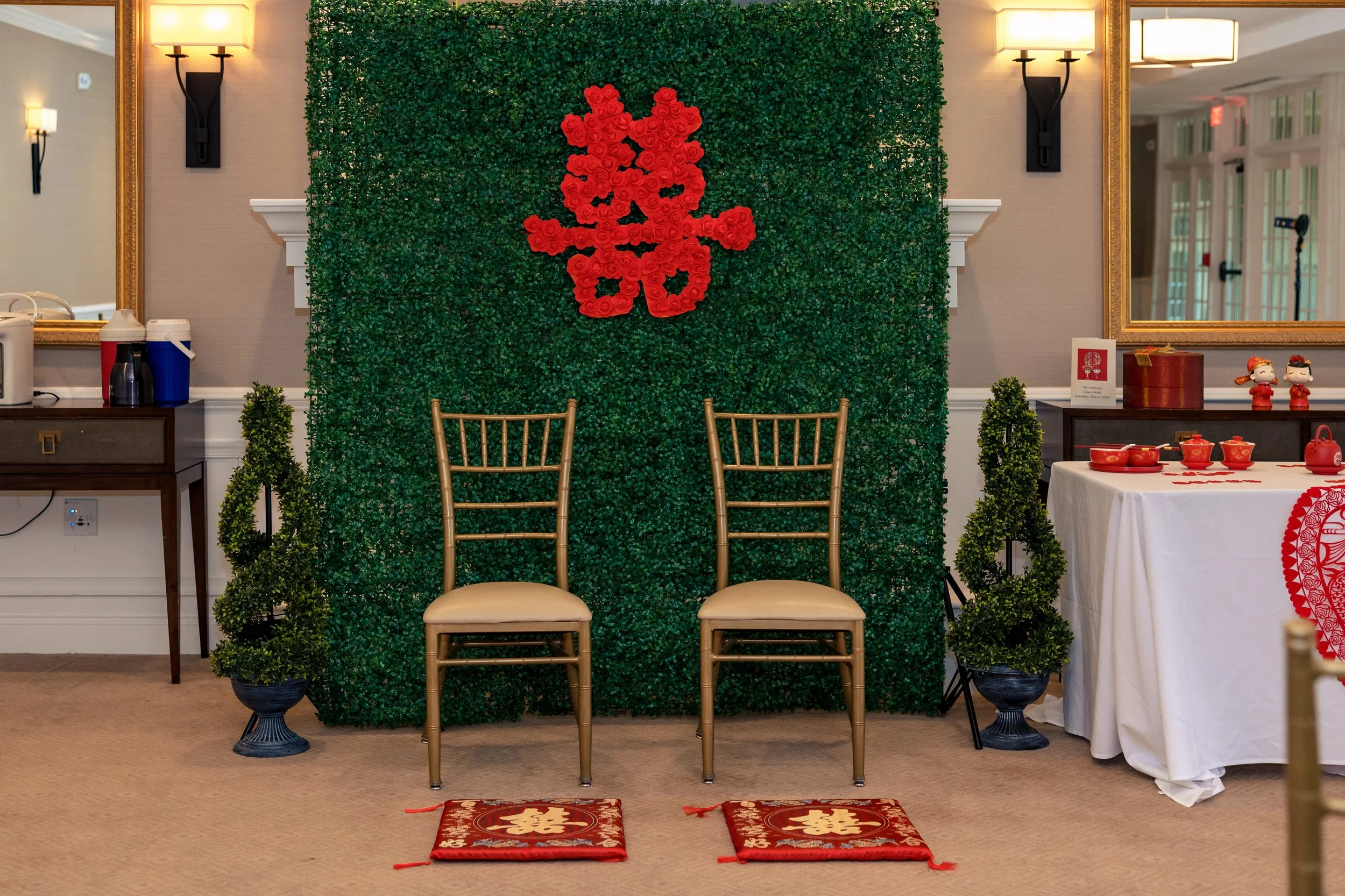
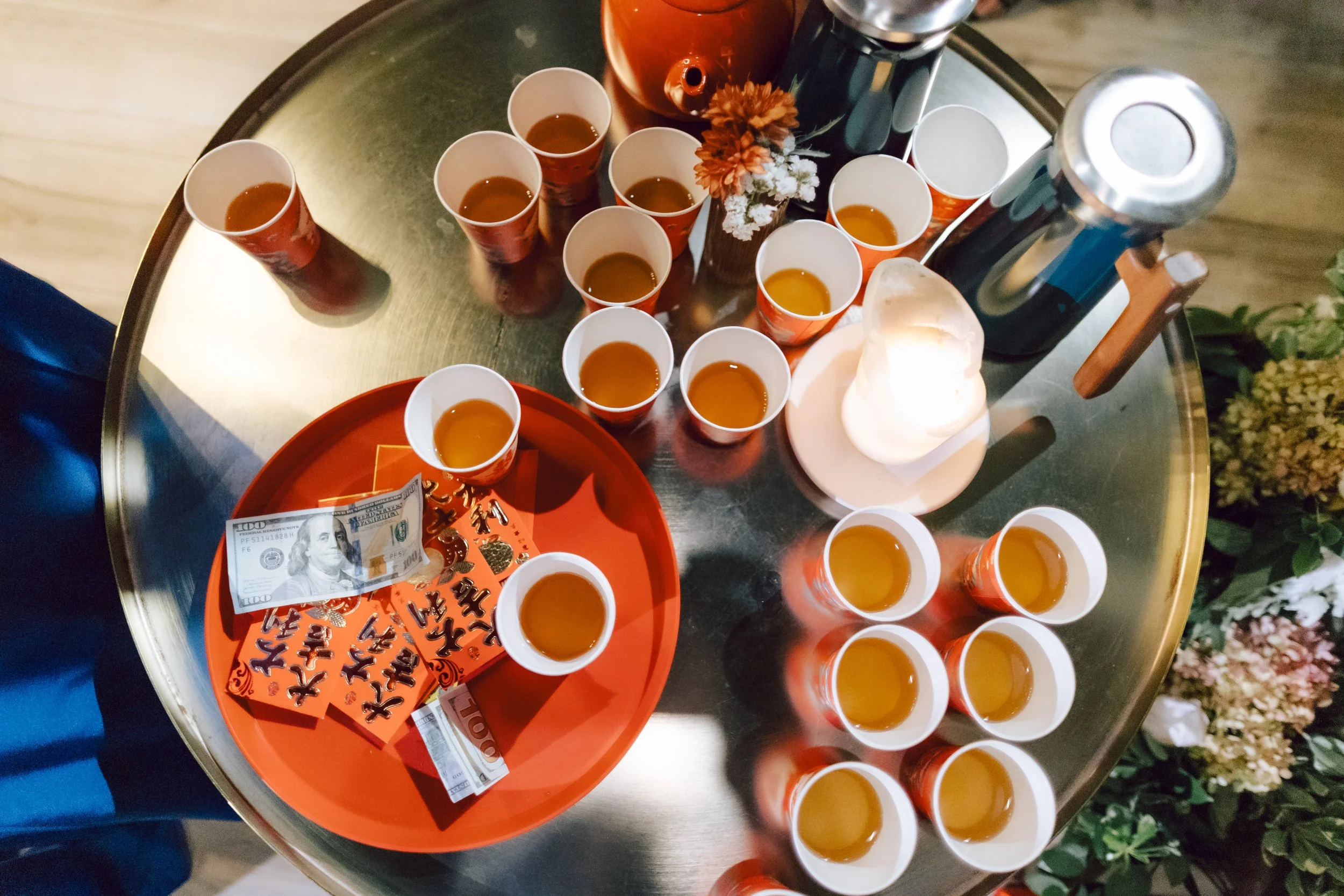
For many Asian families, a tea ceremony is one of the most meaningful moments of the wedding celebration. It is often emotional, rich in symbolism, and one of the few moments when generations gather to formally exchange gratitude, blessings, and support.
While every relationship is unique, one thing many couples have in common is the desire to honor the traditions that shaped them while creating a wedding experience that feels authentically their own. Despite its significance, Asian tea ceremonies are often misunderstood during the planning process. Couples frequently underestimate how much time is needed, who should participate, where the ceremony should take place, or how family expectations can differ… even among relatives who share the same cultural background.
Whether you're blending two cultures or balancing different family traditions, thoughtful planning helps create a wedding that honors your heritage, your families, and your shared future.
This guide explores the similarities and differences between Chinese, Vietnamese, and Korean wedding traditions so you can better understand what matters most and build a timeline that supports every meaningful moment.
What Different Asian Tea Ceremonies Have in Common
Before diving into the traditions of specific cultures, it helps to understand the shared meaning behind many Asian wedding ceremonies. While customs vary, the heart of the celebration remains remarkably similar: it's a moment for a couple to express gratitude to the family members who raised, supported, and guided them. In turn, they receive their blessings for a long and happy marriage ahead.
Tea, or another symbolic offering, serves as a gesture of respect and appreciation. The ceremony typically follows a generational order, beginning with parents and grandparents before moving to younger relatives, reflecting the deep value many Asian cultures place on honoring elders. Family members often offer blessings in their own way: a red envelope, a piece of jewelry, words of wisdom, or a simple gesture of affection. These exchanges transform the ceremony into more than a tradition; they become a meaningful bridge between generations, celebrating both family heritage and a couple's new beginning.
One of the first planning decisions couples should make is determining whether the ceremony will be private or shared with wedding guests. Some families prefer an intimate gathering reserved for relatives participating, while others view the ceremony as an opportunity to introduce their culture and traditions to the broader guest list. This single decision can significantly impact your wedding day timeline, venue layout, and guest experience.
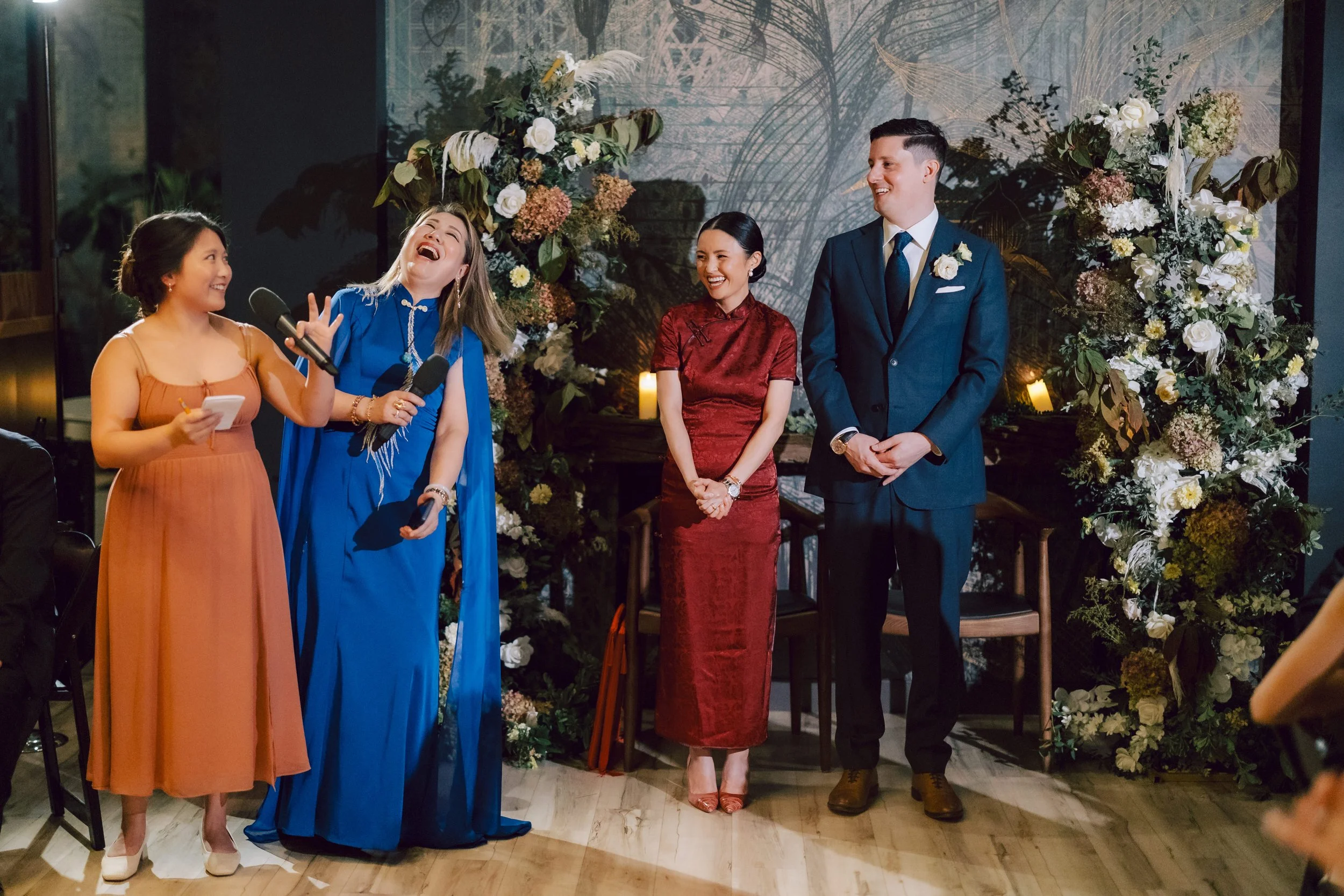
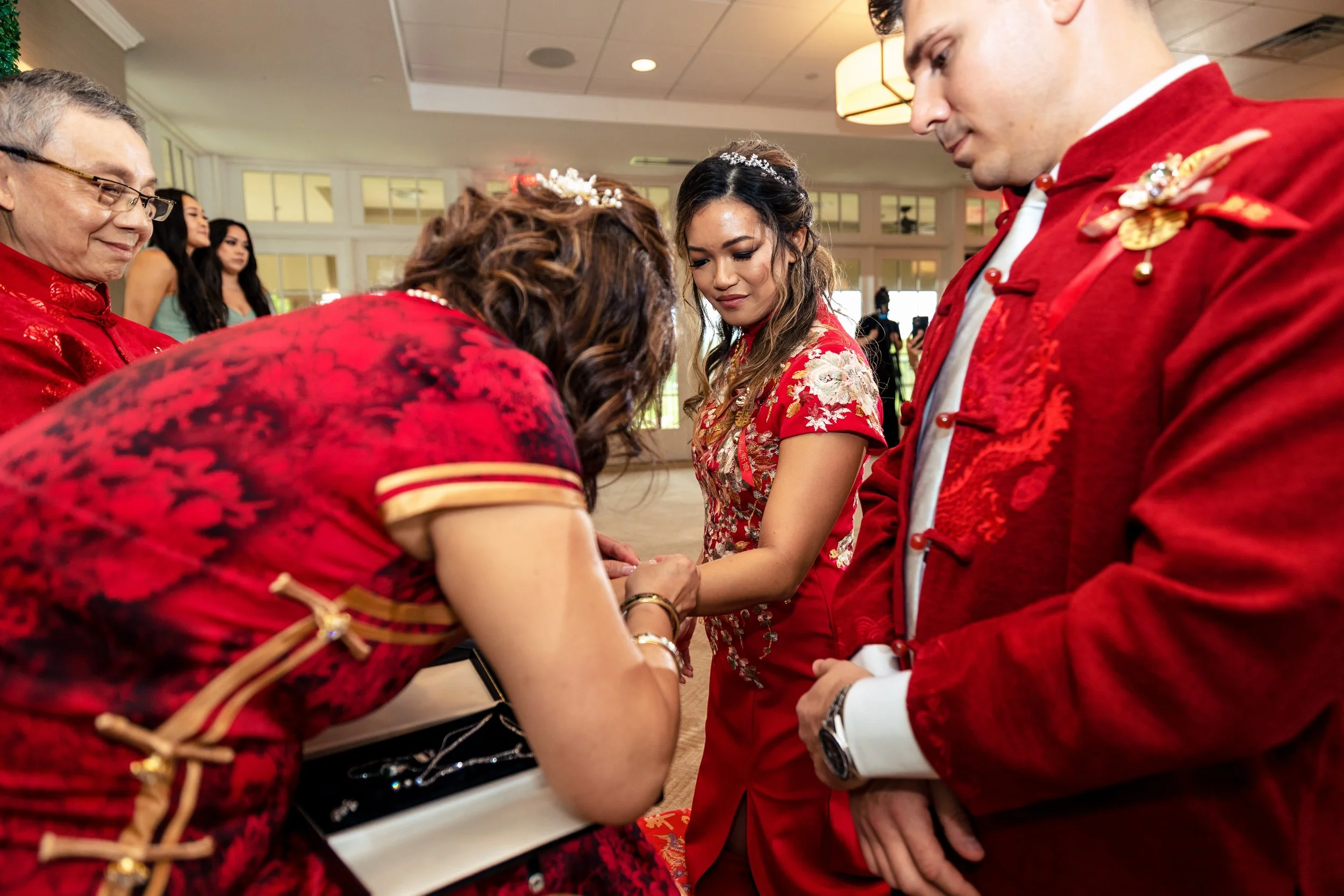
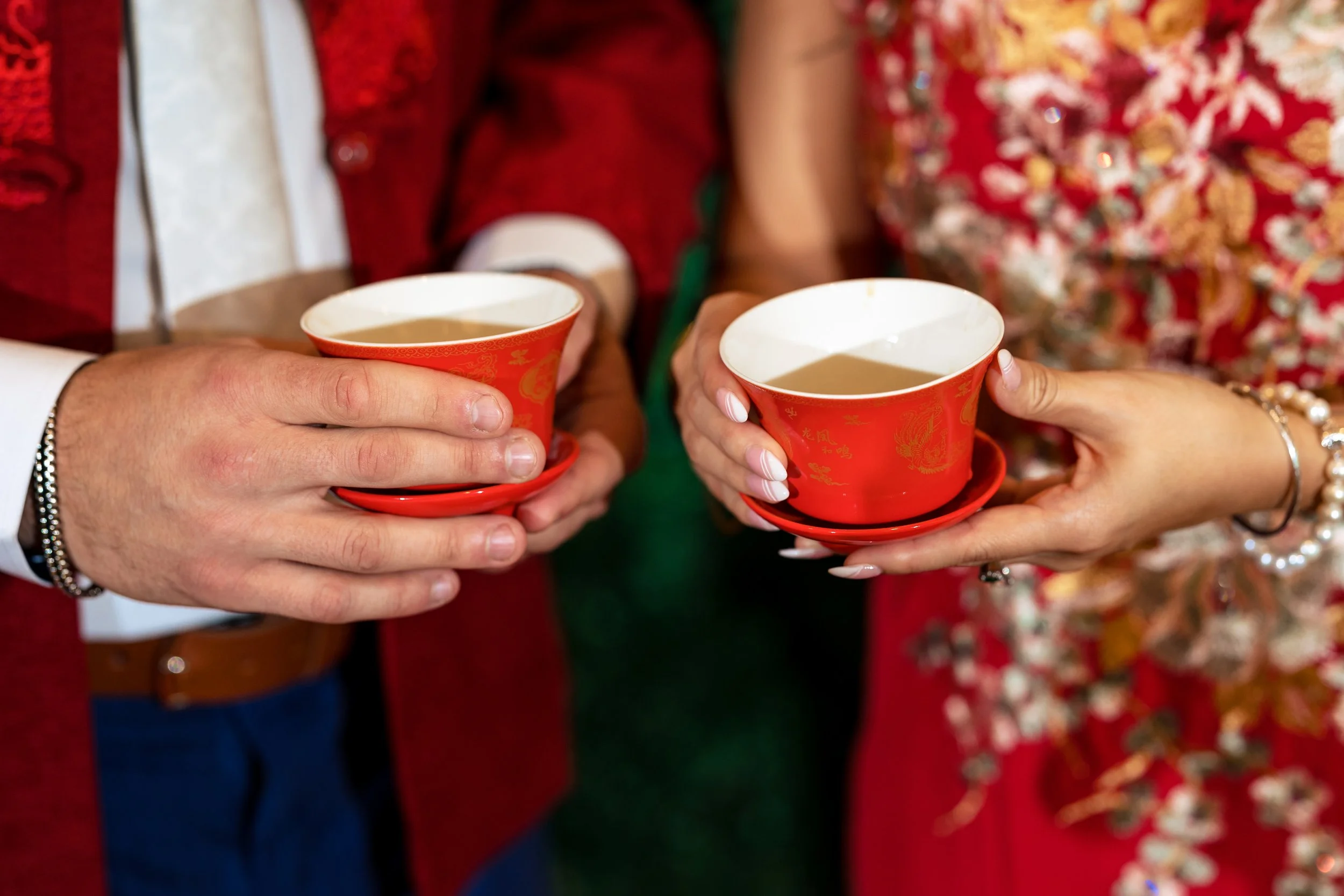
Chinese Wedding Tea Ceremonies
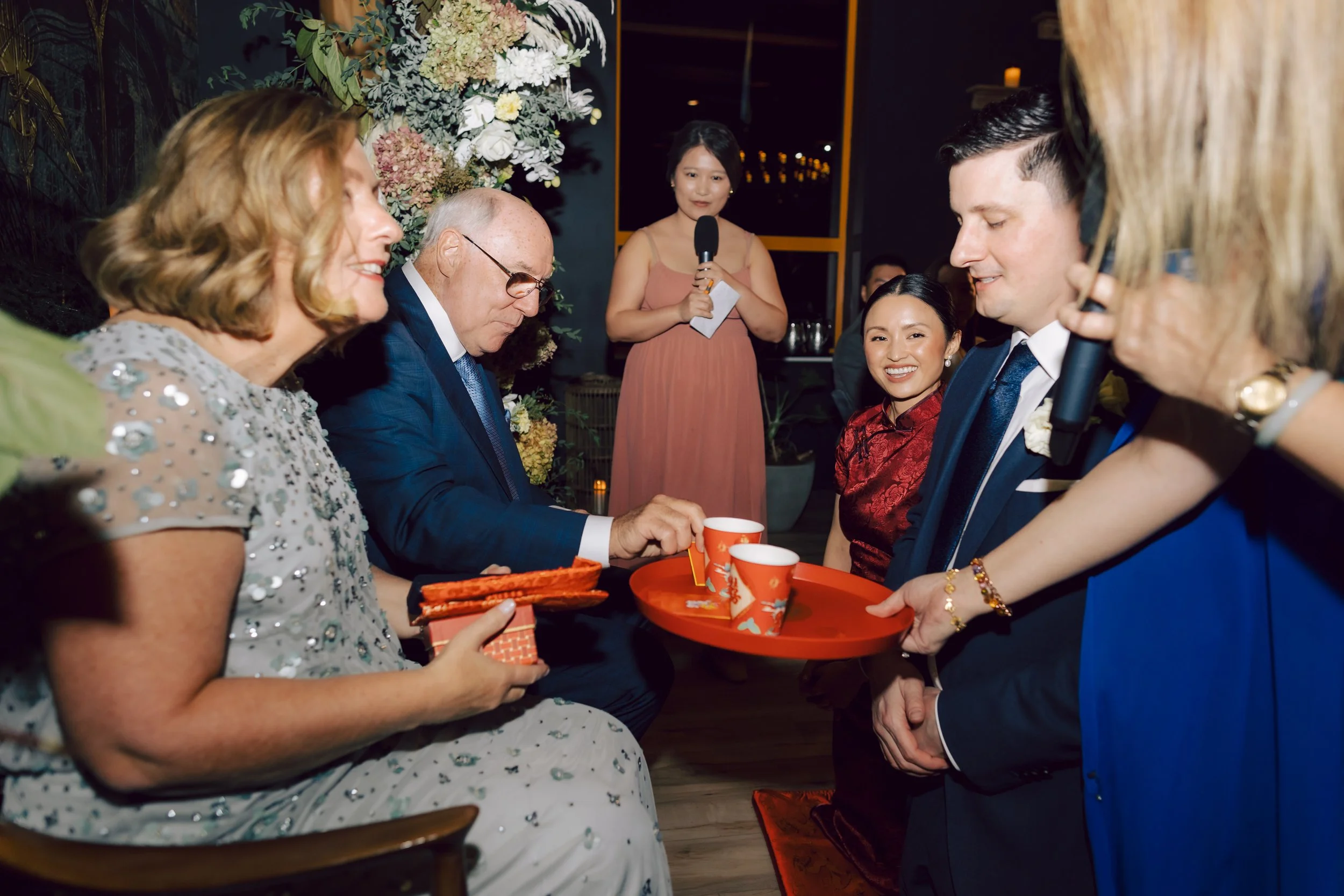
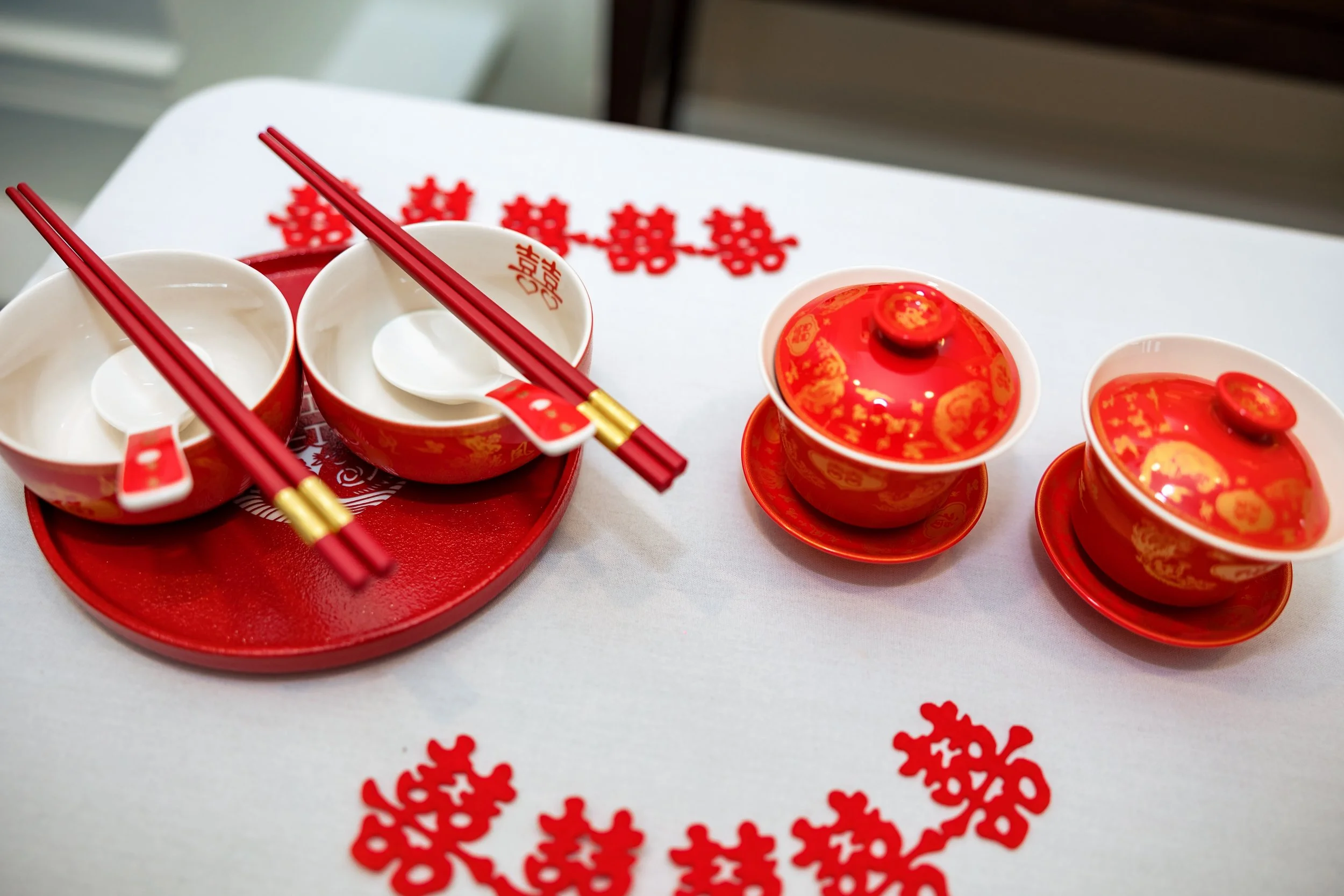
The Chinese tea ceremony is often considered one of the most important cultural elements of a traditional Chinese wedding. It symbolizes respect, gratitude, and the formal joining of two families.
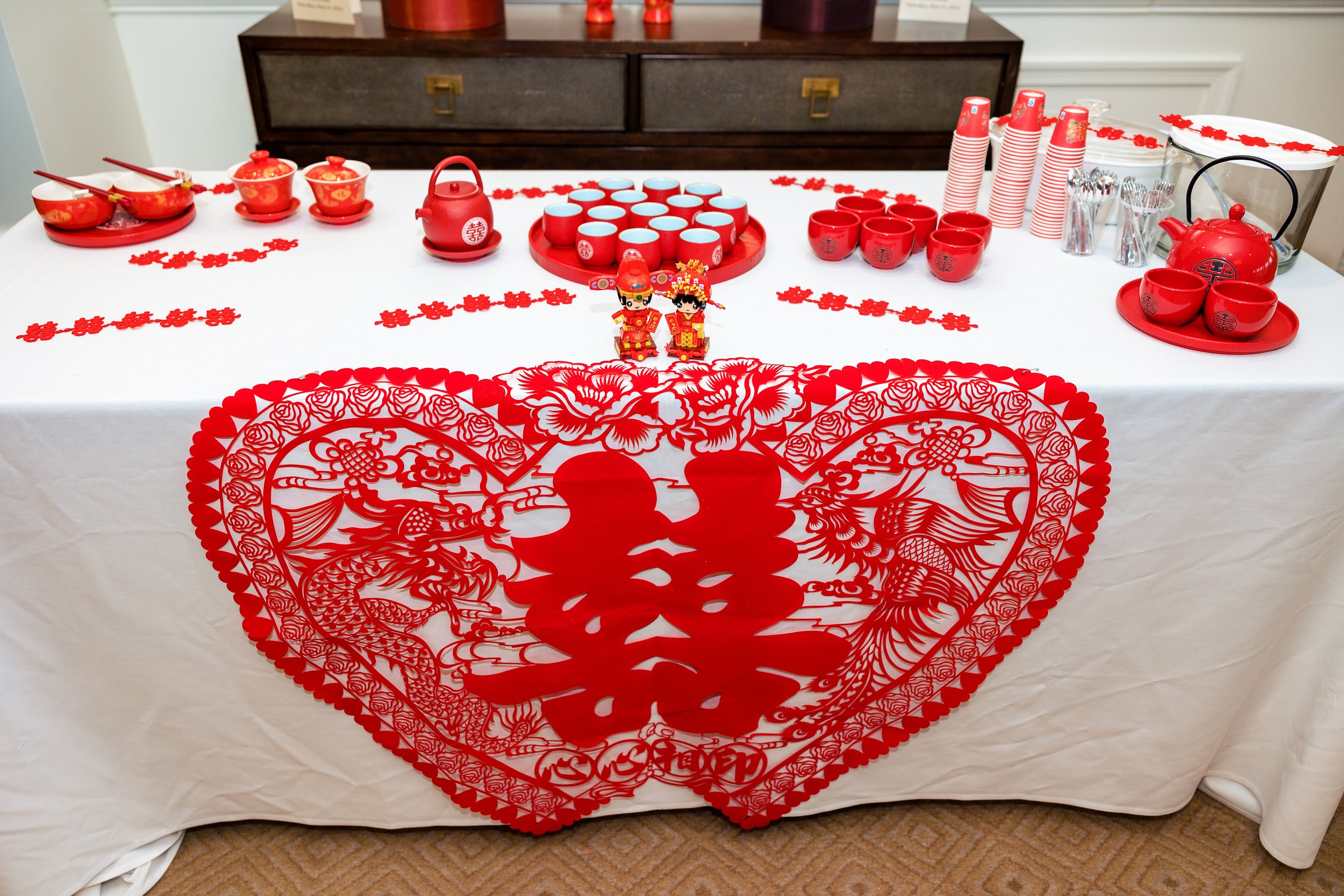
Many Chinese couples choose to wear a traditional qipao (cheongsam) or qun kua during their tea ceremony. Red is the most common color, symbolizing happiness, prosperity, and good fortune in marriage. Intricate embroidery featuring dragons and phoenixes is especially popular, representing the balance and union of the couple.
Key Chinese Wedding Traditions
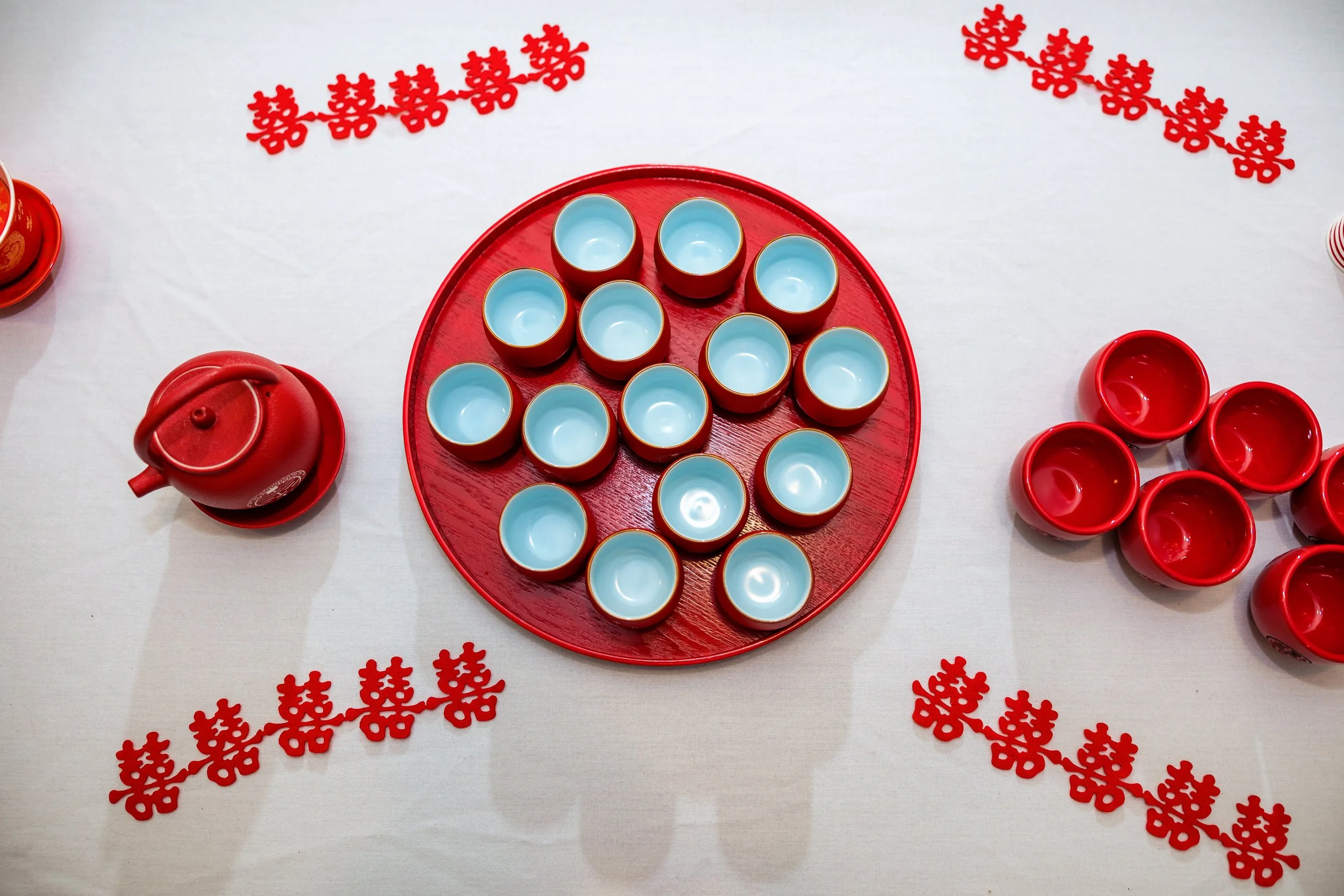
During the ceremony, the couple serves tea to parents, grandparents, and senior relatives, typically beginning with the oldest generation. Family members often present red envelopes (hongbao) containing money or jewelry as a blessing for prosperity and good fortune.
Depending on the family's traditions, the ceremony may take place at home, in a hotel suite, or at the wedding venue itself. Some families hold separate ceremonies for each side of the family, while others combine everyone into a single event.
Modern couples may choose to incorporate bilingual introductions, explain the significance of the ceremony to guests, or blend contemporary elements with longstanding traditions. The details may vary, but the emphasis on honoring elders remains constant.
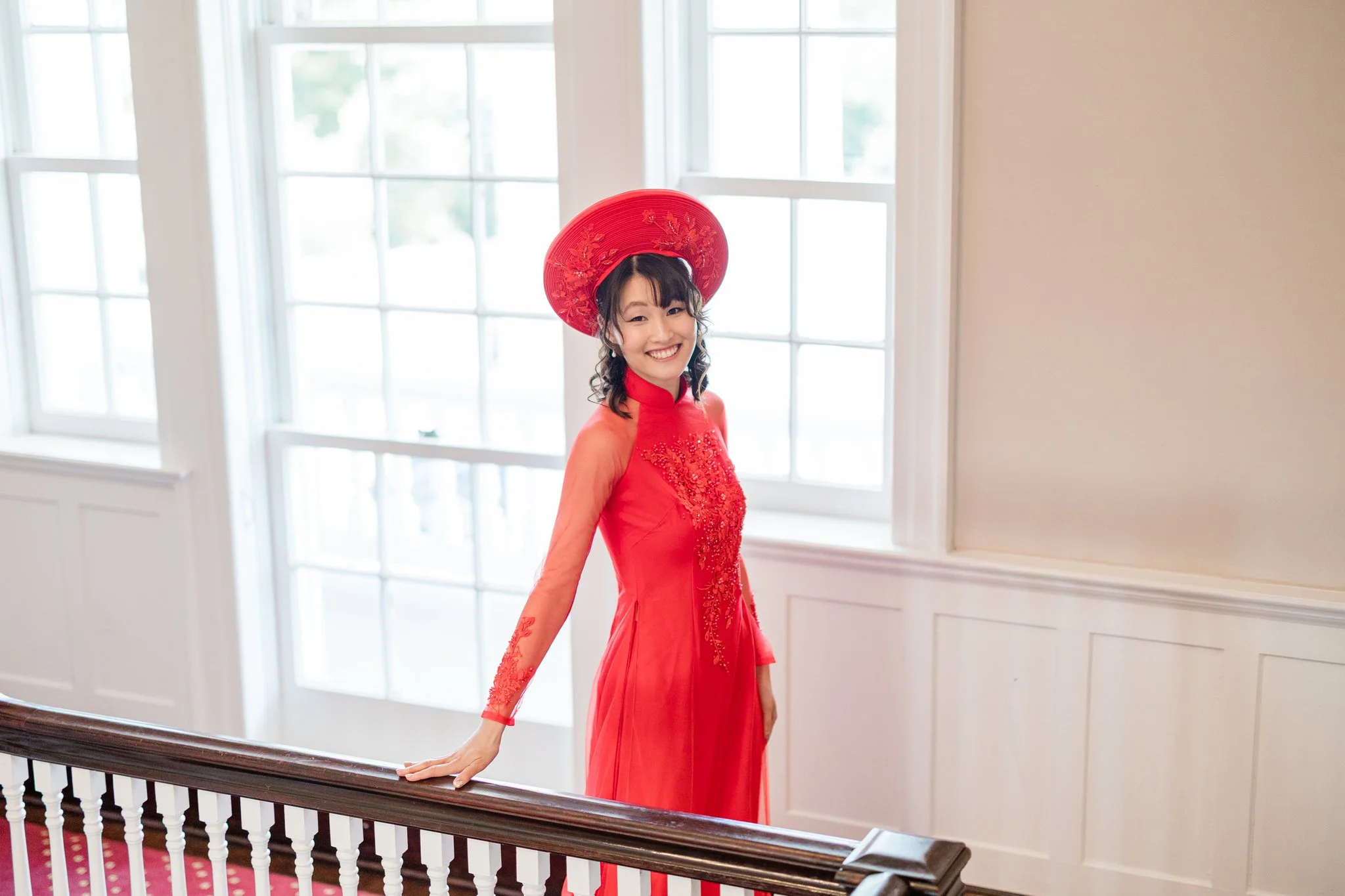
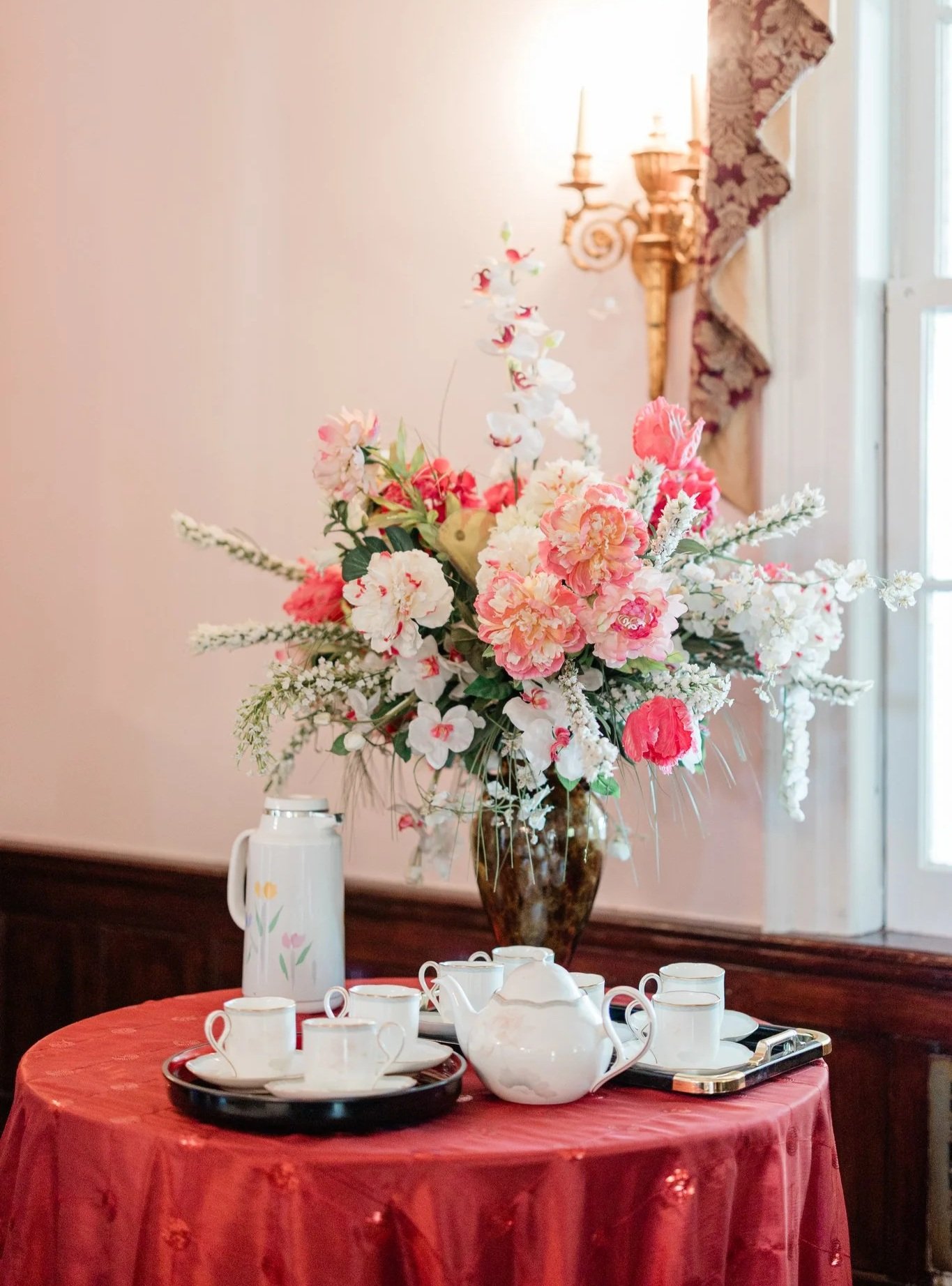
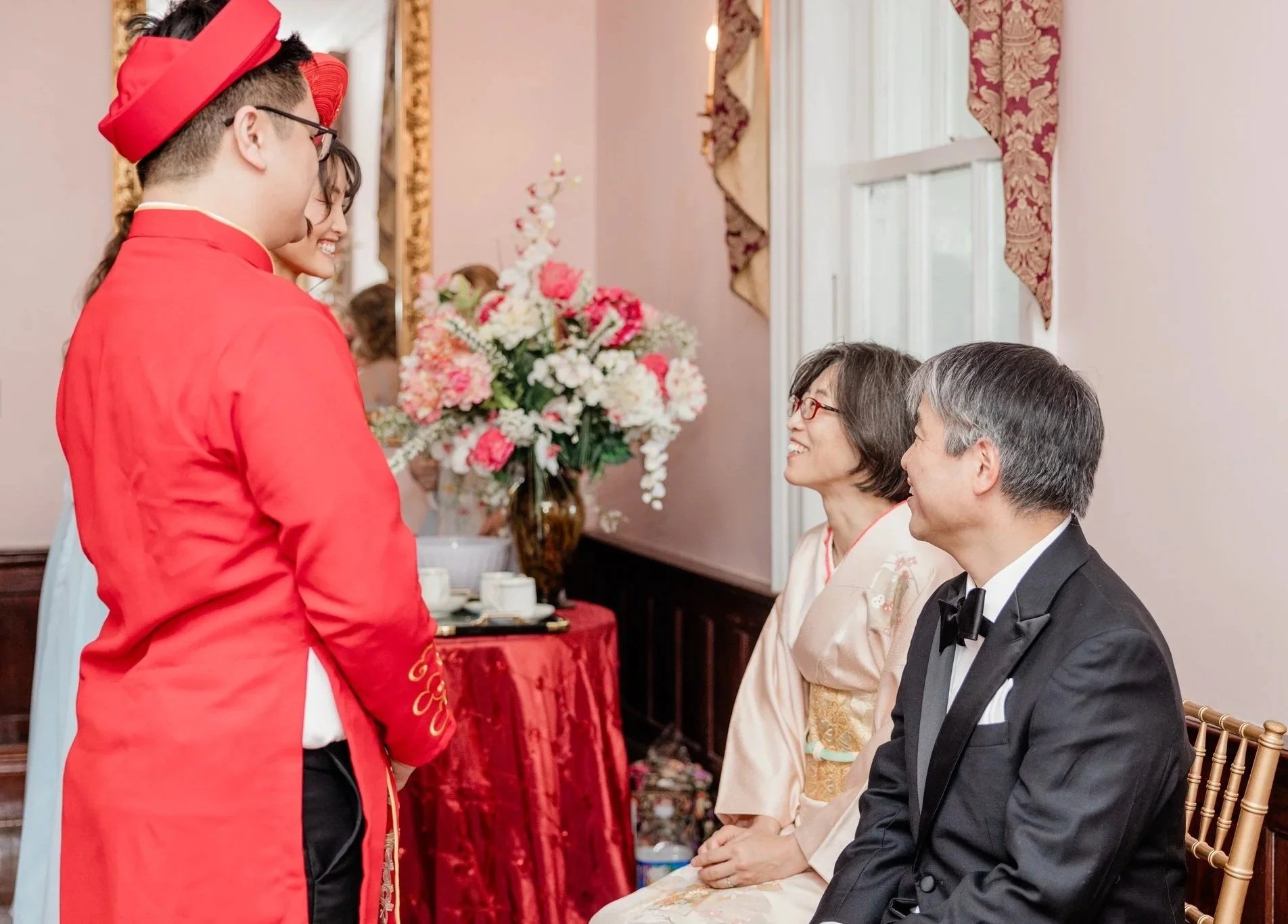
Vietnamese Wedding Tea Ceremonies
Vietnamese tea ceremonies are often part of a broader wedding tradition known as Lễ Gia Tiên, depending on the family's customs and whether engagement traditions are also incorporated. Couples traditionally wear an áo dài, an elegant long tunic worn over pants. Bridal áo dài often feature rich colors, detailed embroidery, dazzling embellishments, and symbolic motifs. Because many couples change into Western wedding attire afterward, it's important to build sufficient time into the schedule for outfit changes and portraits.
Key Vietnamese Wedding Traditions
In Vietnamese custom, the day begins with the groom’s family arriving bearing gifts presented in red trays covered with traditional fabrics. These gifts often include fruit, tea, wine, pastries, or symbolic items representing prosperity and good fortune.
Following introductions between families, the couple serves tea to parents and elders while receiving blessings and gifts. Family members may offer jewelry, red envelopes, or words of encouragement for the couple's future together.
Because Vietnamese ceremonies often involve multiple formal components—including gift presentations, introductions, speeches, ancestor tributes, and tea service—they can require more time than couples initially expect. This is especially true when large extended families participate. Many modern couples choose to skip some portions and analyze which parts are important to their families and the other aspects of the timeline.
When planning a Vietnamese tea ceremony, it is important to discuss guest counts and participation expectations early. Some families include dozens of relatives, while others reserve speaking roles and tea service for immediate family members only.
Korean Wedding Traditions: The Paebaek
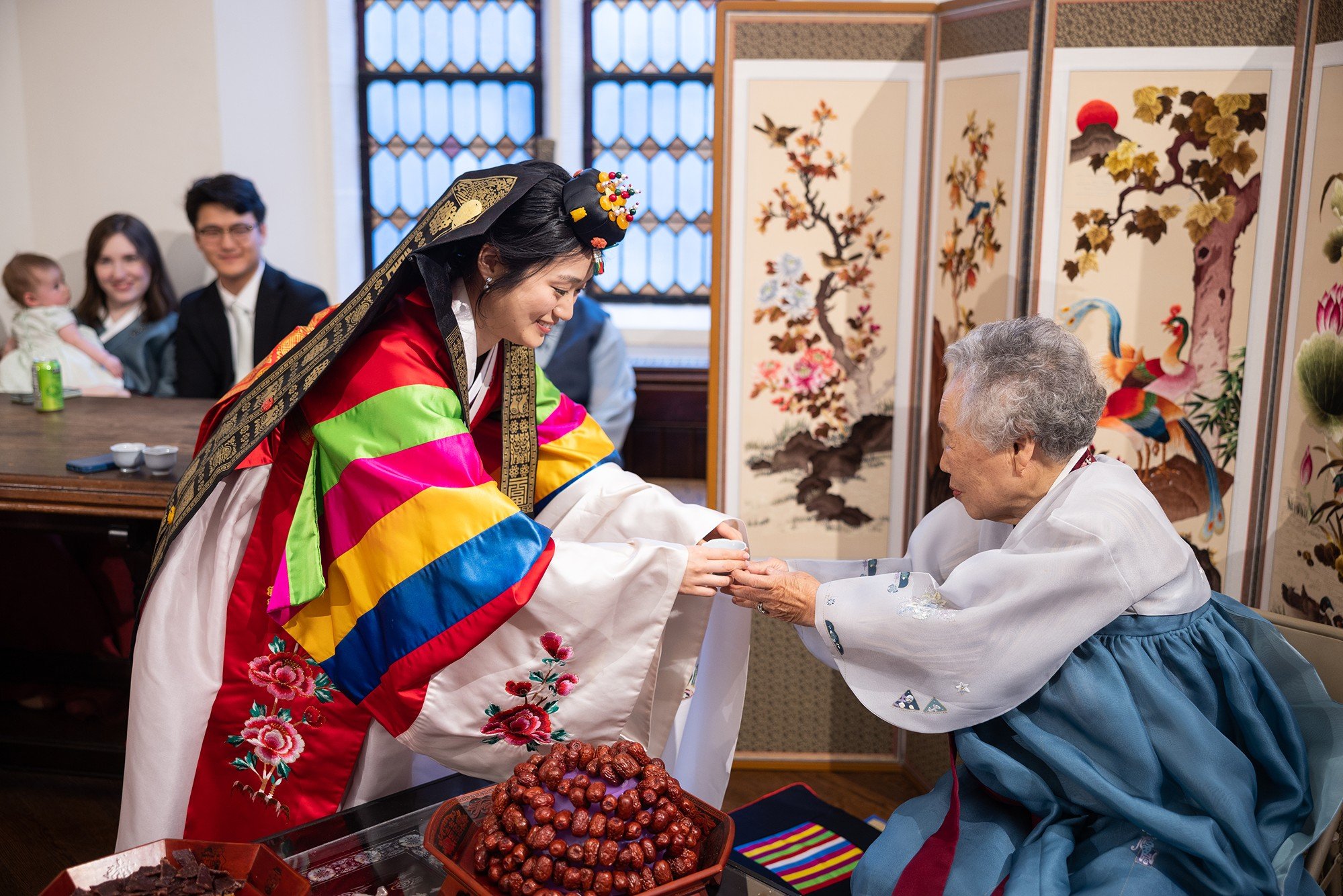
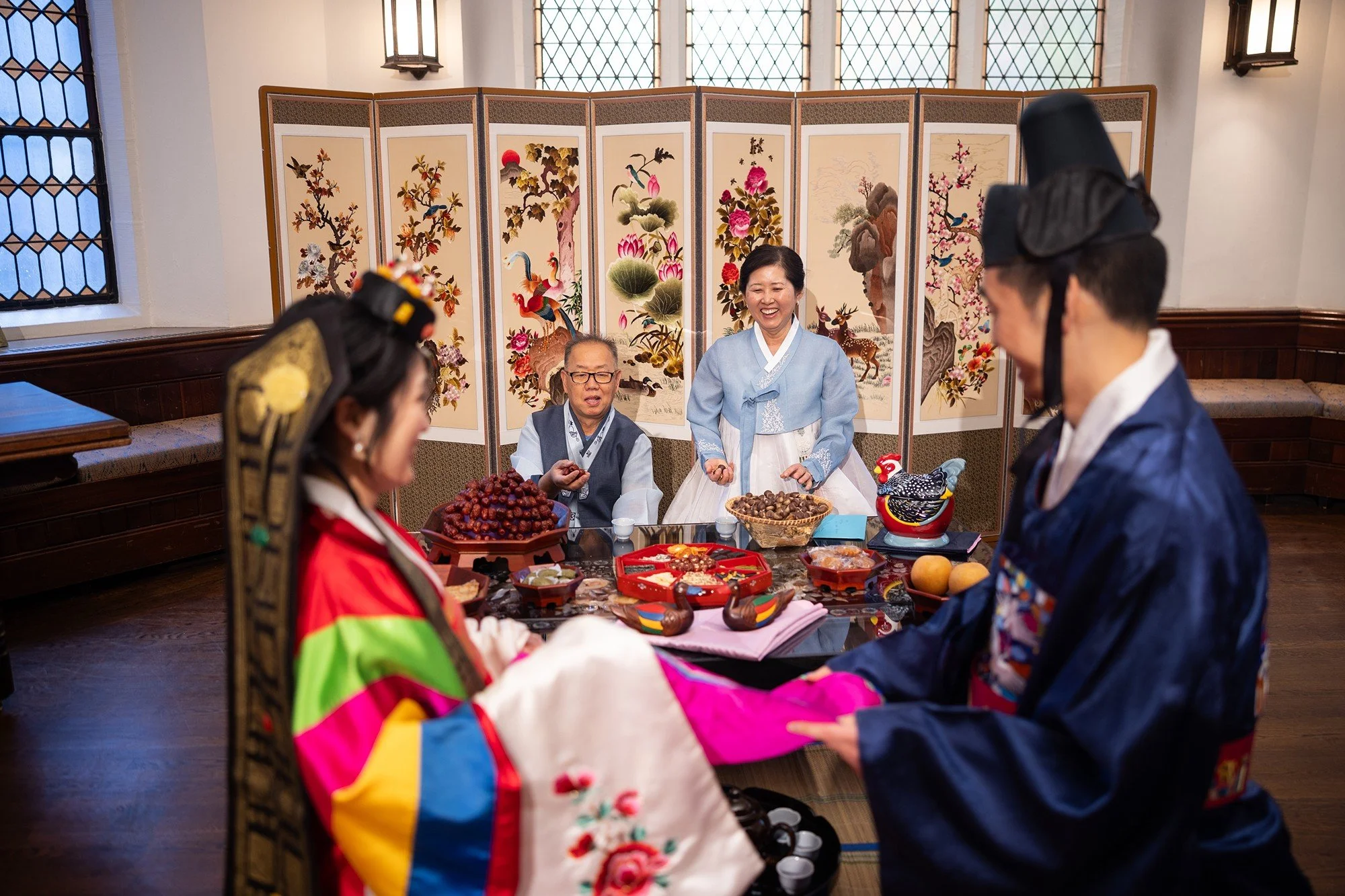
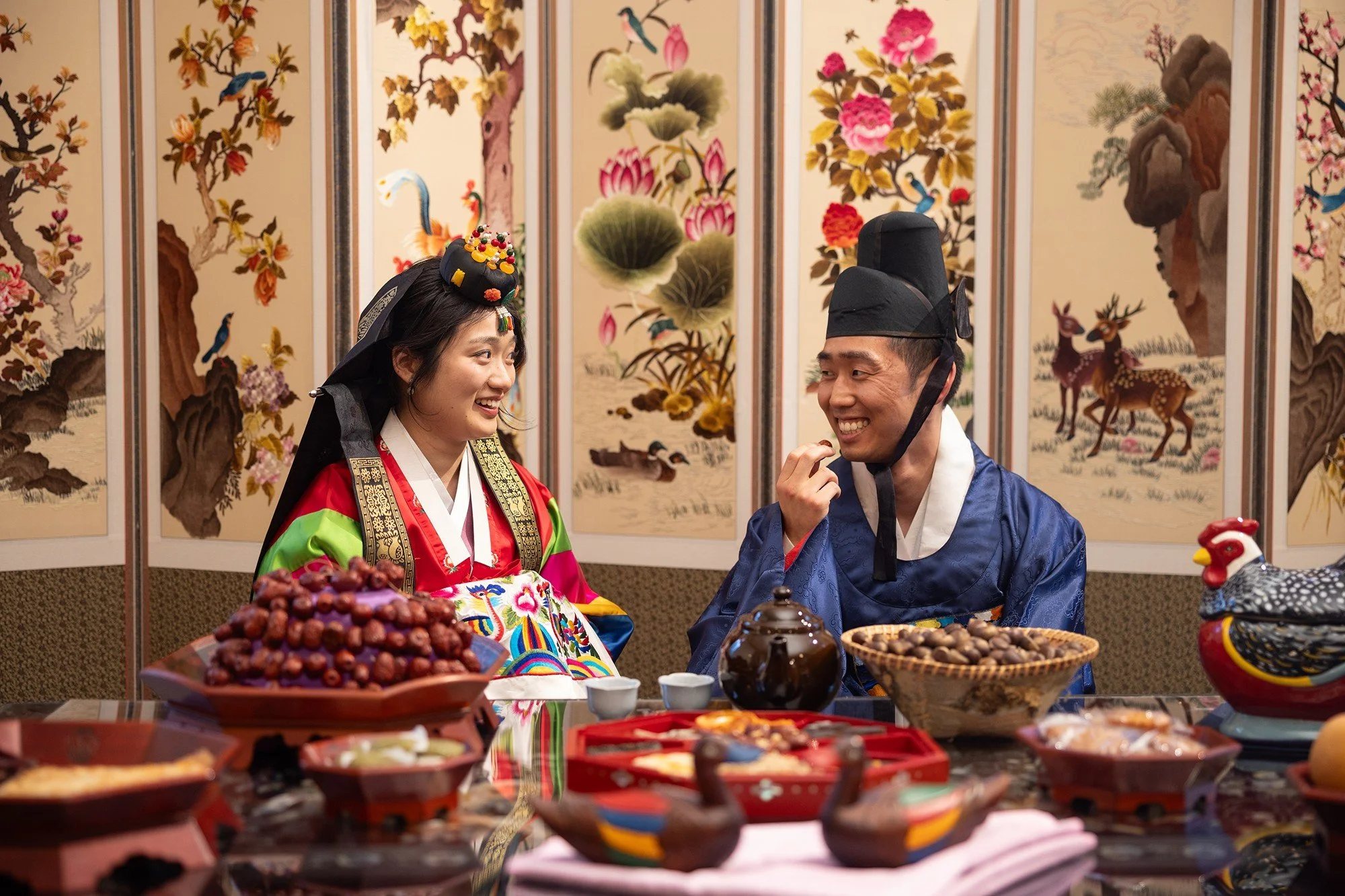
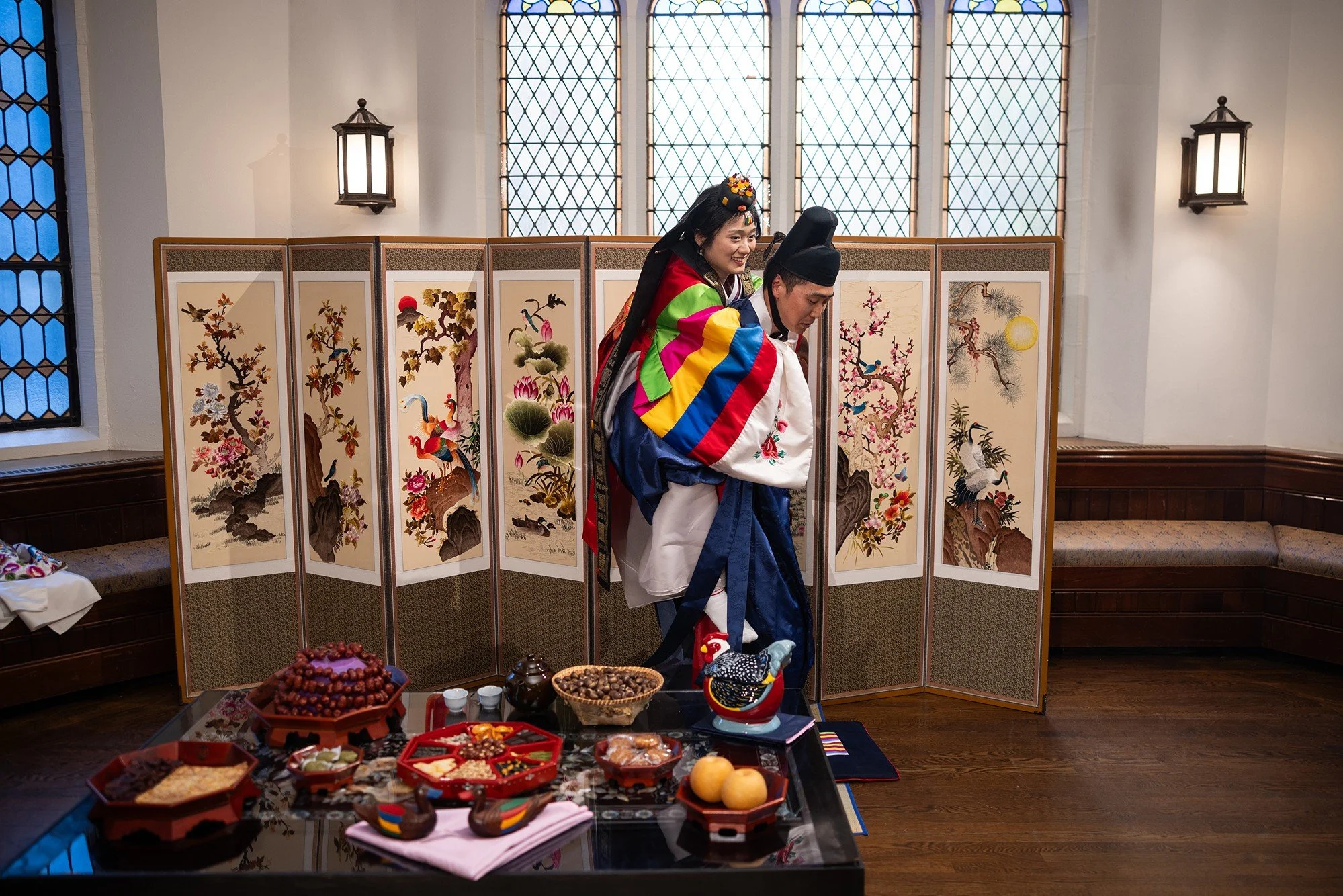
While Chinese and Vietnamese tea ceremonies are a little more similar, Korean weddings have an energy all their own with a ceremony called the Paebaek. This tradition is more playful, a little more theatrical and includes unique elements that each hold their own meaning. Historically, the Paebaek took place after the wedding ceremony and was intended as a formal introduction of the bride to the groom's family. Today, many Korean couples adapt the tradition to include both families.
Key Korean Wedding Traditions
The Paebaek ceremony typically involves deep bows, a tossing presentation of dates and chestnuts symbolizing future children and prosperity, and words of advice from parents and elders. Couples wear traditional hanbok attire, creating a visually striking and culturally significant experience. Often there's a piggyback moment too, with the groom carrying his new wife for a few playful steps to symbolize his strength.
Unlike Chinese and Vietnamese tea ceremonies, tea itself may not be the central focus. Instead, the emphasis is placed on respect, blessings, and symbolic rituals that celebrate family unity. Many couples choose to schedule the Paebaek between the ceremony and reception or during cocktail hour, making timeline planning especially important.
Planning A Multicultural Asian Wedding
Some of the most beautiful celebrations happen when families bring different traditions together. Whether you're blending Chinese and Vietnamese customs, Korean and Japanese heritage, or Asian and Western wedding traditions, there is no single "right" way to honor your cultures. The most successful multicultural weddings begin with conversations.
Ask parents and grandparents which traditions feel most meaningful to them. Determine whether there are customs that are essential to preserve and others that can be adapted to fit your wedding day and lifestyle specifically.
You may choose to:
Hold a tea ceremony before a Western-style ceremony.
Incorporate bilingual emceeing or printed ceremony explanations.
Include traditional attire for part of the day.
Combine multiple cultural rituals into one cohesive celebration.
Create private family moments before welcoming guests into the celebration.
The goal is creating a wedding that feels authentic to your families and your stories weaving together.
Many couples work with an experienced multicultural wedding planner to help navigate family expectations, ceremony logistics, and wedding day timelines. As planners, we've found that many challenges aren't about the traditions themselves; typically, they're about communication and logistics. Building enough time into the schedule and creating space for meaningful family moments often makes the difference between a rushed experience “just for the sake of it” and a truly memorable one.
However You Have A Tea Ceremony, It's Yours
No two families celebrate in exactly the same way.
Even within the same culture, traditions can vary by region, generation, immigration experience, and personal preference. What matters most is not following a checklist perfectly, but understanding the meaning behind the traditions and finding ways to honor the people who matter most.
Whether you're planning a Chinese tea ceremony, a Vietnamese family celebration, a Korean paebaek, or a wedding that beautifully blends multiple cultures, these moments create an opportunity to connect generations, celebrate heritage, and begin your marriage surrounded by love and support.
At Belmont Events, we believe cultural traditions deserve a dedicated level of thoughtful planning, just like every other part of your wedding day. From timeline creation and family coordination to multicultural wedding logistics, we're here to help create a celebration that feels seamless, meaningful, and uniquely yours.
Are there traditions your family has incorporated into your wedding throughout generations or specific traditions you're hoping to include? We'd love to hear about them in the comments below.
Photography by: Justin John Photography, Eileen Pi Photography, Bom Photography, Abhi Sarkar Photography